Address
Calle Gava, 25
Barcelona, Spain
Work Hours
Monday to Friday: 7AM - 7PM
Weekend: 10AM - 5PM
Address
Calle Gava, 25
Barcelona, Spain
Work Hours
Monday to Friday: 7AM - 7PM
Weekend: 10AM - 5PM
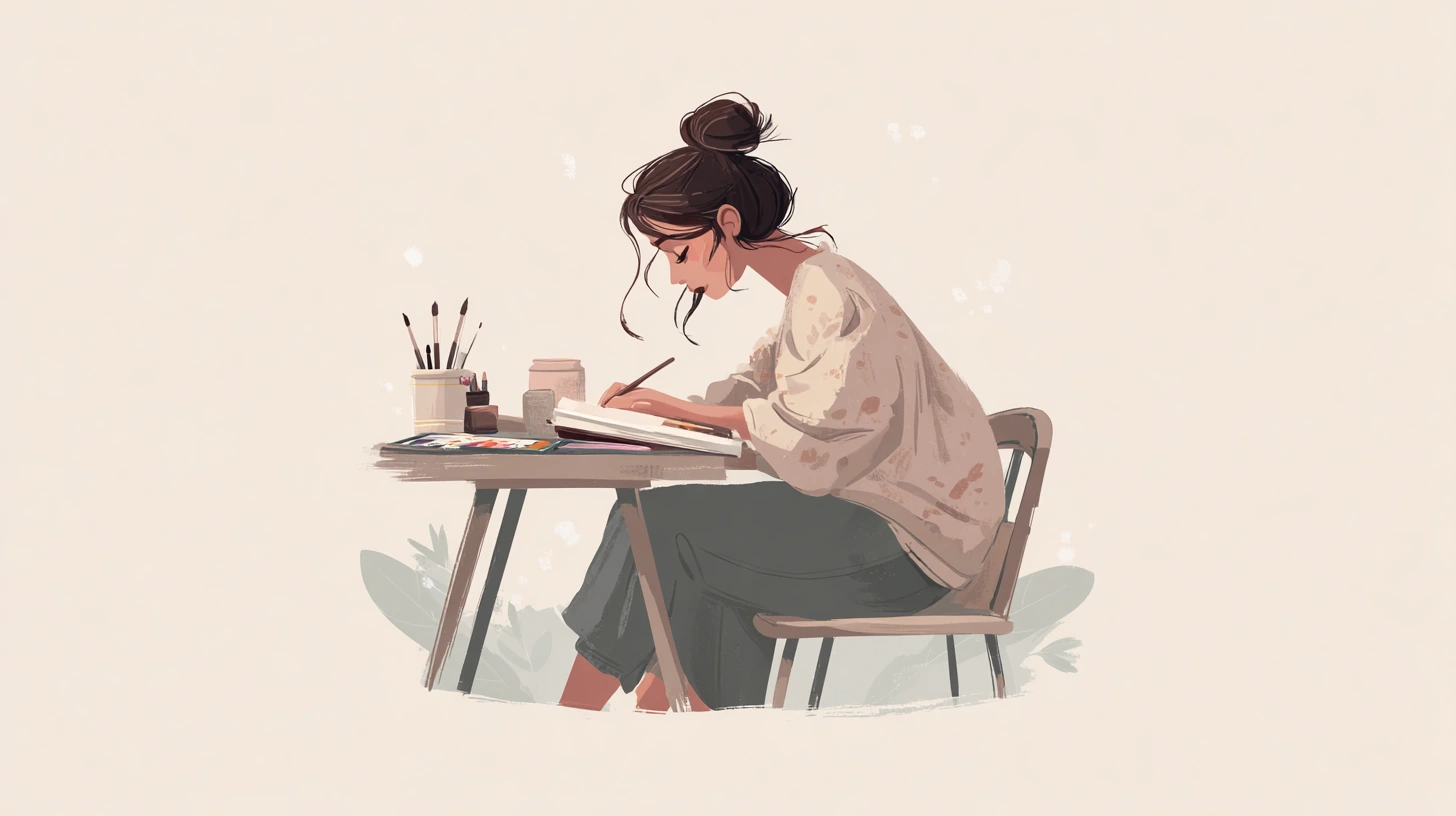
If you’ve ever sat down to journal only to find that the words just won’t come, you’re definitely not alone. Most days, our brains are just too fried for “deep thoughts” after a long stretch of screens and meetings.
But here’s the good news: journaling doesn’t have to be some long-winded, serious essay about your feelings. It’s allowed to be a messy, colorful, and totally imaginative playground instead.
Using creative journal prompts allows you to process your world through sketches, colors, and stories rather than just sentences. By shifting to creative journaling prompts, you engage a different part of your brain—one that thrives on play rather than “productivity.” It’s about making the internal, external, whether that’s through a watercolor wash or a fictional character.
Think of your journal as a portable laboratory for your mind. Whether you are using art journal prompts to capture a mood or designing a complex system for your life, the goal is to lower the stakes and raise the fun. This guide will walk you through the various ways you can use creativity to rediscover your spark and make your journal a place of true inspiration.
Sometimes, the best way to understand your own life is to imagine someone else’s. Fiction writing isn’t just for novelists; it’s a brilliant way to explore your own subconscious under the “mask” of a story. When you feel stuck in your own head, stepping into a character’s shoes can offer a fresh perspective on your real-world problems.
Using prompts to spark a narrative helps bypass that paralyzing fear of the blank page. It gives you a starting point—a “what if”—that pulls you out of your current reality and into a world of possibility. If you’re ready to see where your imagination can take you, start your next story with creative writing journal prompts.
There are moments when language feels too small for what we’re experiencing. On those days, picking up a pencil or a brush can be much more therapeutic than writing a list. Art journaling isn’t about being a “pro artist”; it’s about using color and form to represent the energy of your day.
When you focus on the curve of a line or the blend of two colors, you enter a “flow state” that naturally reduces stress. It’s a sensory experience that grounds you in the present moment. If you want to explore the visual side of your mind, grab your sketchbook and use this art journal prompts list.
We spend so much of our lives trying to keep things “tidy,” but there is a deep, quiet joy in being messy. Junk journaling is the art of collecting the “scraps” of your life—ticket stubs, receipts, dried leaves, or old wrapping paper—and turning them into a tactile map of your memories. It’s less about “drawing” and more about “layering.”
This style of journaling celebrates the imperfect. It’s a way to hold onto the physical pieces of your story that would otherwise end up in the trash. To start building your own beautiful, textured history, build a collage with these junk journal prompts.
If you love the idea of being creative but also need to keep your life on track, the Bullet Journal is your best friend. It’s a modular system that combines your to-do list, your calendar, and your creative doodles into one cohesive book. It turns “getting things done” into an act of self-care rather than a source of anxiety.
The BuJo method allows you to design a system that works specifically for your brain, not a pre-printed planner’s version of it. It’s a living document of your goals and your growth. If you’re ready to organize your world with a touch of art, design your next spread with bullet journal prompts.
One of the biggest reasons people stop journaling is the fear of “ruining” a beautiful notebook. Interactive journaling—like the “Wreck This Journal” trend—is the ultimate cure for that perfectionism. It gives you permission (and instructions!) to tear pages, spill coffee, and paint with your fingers.
When you intentionally “wreck” a page, you break the cycle of needing things to be perfect. You realize that the value is in the action, not the aesthetic. It’s a liberating way to release pent-up energy and rediscover the fun of making a mess. To let go of the rules, embrace the chaos with wreck this journal prompts.
Sometimes, the best way to get your brain back online is to ask it something completely bizarre. “Serious” journaling can sometimes lead to overthinking, but answering a lighthearted or weird question acts as a mental “reset.” It’s about flexing your “fun” muscles and looking at the world through a surreal lens.
Whether you’re writing a Yelp review for a cloud or designing a house for a ghost, these prompts help you bypass your “Inner Critic.” They remind you that your journal is a place for play, curiosity, and laughter. If you’re feeling bored or uninspired, answer the weirdest questions using these fun journal prompts.
Ready to dive into your creative laboratory? Here are three tips to make the habit stick:
If you’re looking for practical ways to deepen your journaling practice, explore these powerful journaling techniques for mental clarity and creativity, which walk through 20 structured methods you can start using immediately
Visual journaling is keeping a journal where the primary record is image rather than sentence — colour, collage, marks, diagrams, scraps. It is not illustration of writing you have already done. The image is the entry. People reach for it when a feeling is clear but the words for it are not, which is most of the time.
No, and the belief that you do is the main reason people never start. An art journal is a private record, not a portfolio, and nobody is grading the proportions. Colour blocking, torn paper, handwriting used as texture and single repeated marks all work without a single representational drawing. If you can fill a page, you can keep one.
A book with paper heavy enough not to buckle, one black pen, and one source of colour. That is genuinely it. Buying a full set of supplies before starting is a well-known form of procrastination — the elaborate kit raises the stakes of the first page and makes it harder to ruin, which is exactly what you need to be able to do.
Ordinary journaling asks what happened and how you feel about it. Creative journaling asks you to make something in response instead, which routes around the part of your brain that edits. That is why it often surfaces material a written entry would have tidied away, and why it suits days when writing feels like homework.