Address
Calle Gava, 25
Barcelona, Spain
Work Hours
Monday to Friday: 7AM - 7PM
Weekend: 10AM - 5PM
Address
Calle Gava, 25
Barcelona, Spain
Work Hours
Monday to Friday: 7AM - 7PM
Weekend: 10AM - 5PM

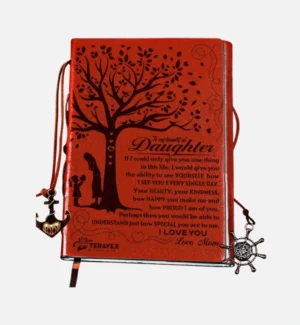
Journal gifts for daughters, including meaningful writing journals and keepsake books from moms and parents who want to encourage reflection, confidence, and connection.Physical products in this collection link to Amazon for purchase. Dear Family may earn from qualifying purchases.
Showing all 2 results
A journal for a daughter is usually one of two things: a book a mother or father fills in and gives her, or a shared book the two of them pass back and forth. The first is a keepsake she opens once and keeps forever. The second is a conversation that happens on paper over months.
Both are answers to the same problem. There is a great deal most parents mean to tell a daughter and never find the moment for — what they were like at her age, what they were afraid of, what they got wrong, what they hope she does not repeat. Writing removes the need for a good moment.
Choose a one-way keepsake if there is an occasion attached — a birthday, a graduation, leaving home, a wedding. Those get read at the moment they are given and again years later. Choose a pass-back-and-forth journal if the aim is to stay in touch with what she actually thinks, which suits the eleven-to-sixteen stretch particularly well. A shared journal needs space for two hands, so check it was designed for it.
The specific over the general, every time. "You have always been kind" is pleasant and forgettable. "You gave your sandwich away on the first day of school and did not mention it" is the sentence she keeps. Write the ordinary detail nobody else witnessed — those are the entries that survive, and the ones a grown daughter reads twice.
A journal written to her works at any age, including before she can read — many parents start one at birth and hand it over at eighteen. A journal she writes in herself needs about eight years old for concrete prompts, twelve for reflective ones. For a shared exchange, seven to fourteen is where it does the most work.
Say out loud at the start whether the book is private or shared, and then hold to it. A shared journal is meant to be read — that is the format. A private one that gets read anyway ends the practice permanently and takes some trust with it. Both choices are legitimate; making the choice ambiguous is the mistake.