Address
Calle Gava, 25
Barcelona, Spain
Work Hours
Monday to Friday: 7AM - 7PM
Weekend: 10AM - 5PM
Address
Calle Gava, 25
Barcelona, Spain
Work Hours
Monday to Friday: 7AM - 7PM
Weekend: 10AM - 5PM
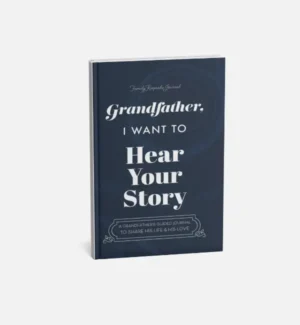
Guided journals for grandfathers that help preserve life stories, lessons, memories, and family history in a thoughtful keepsake book.Physical products in this collection link to Amazon for purchase. Dear Family may earn from qualifying purchases.
Showing the single result
A grandfather's journal is a set of questions that gets his life onto paper while he is still here to answer them. Work, national service, the years before the family existed, the decisions that turned out to matter — the material that disappears completely within one generation if nobody writes it down.
These work particularly well as a legacy journal because the format suits the temperament. A grandfather who would never sit down to "talk about his life" will often work steadily through a book of specific questions, alone, at his own pace, with nobody watching.
Factual prompts, large print, and fewer questions than you would expect. Prioritise anything that asks about work, machinery, places and events over anything that asks how he felt about them — the feeling comes through the answer without being requested. If he is a talker, a life-story journal will fill quickly. If he is not, choose one where a two-line answer looks complete on the page.
Ask him things only he can answer. What his first wage was and what he spent it on. What his father did. What he was doing the day he met your grandmother. What the worst job he ever had was. Specific questions about a world that no longer exists produce far better answers than any question about the relationship — and the relationship comes through anyway.
No, and the difference is why these get finished. A memoir requires him to decide what the story is, structure it and write prose. A legacy journal only requires him to answer the question in front of him. The prompts carry the structure, so the book gets completed by people who would never have started a memoir.
Frame it as curiosity rather than legacy. "I want to know what your life was like" lands very differently from "I want this written down before it is too late", even though they are the same request. Hand it over, say you want to read it, and then leave — an explanation of what it means to you turns a gift into an obligation.